Feature
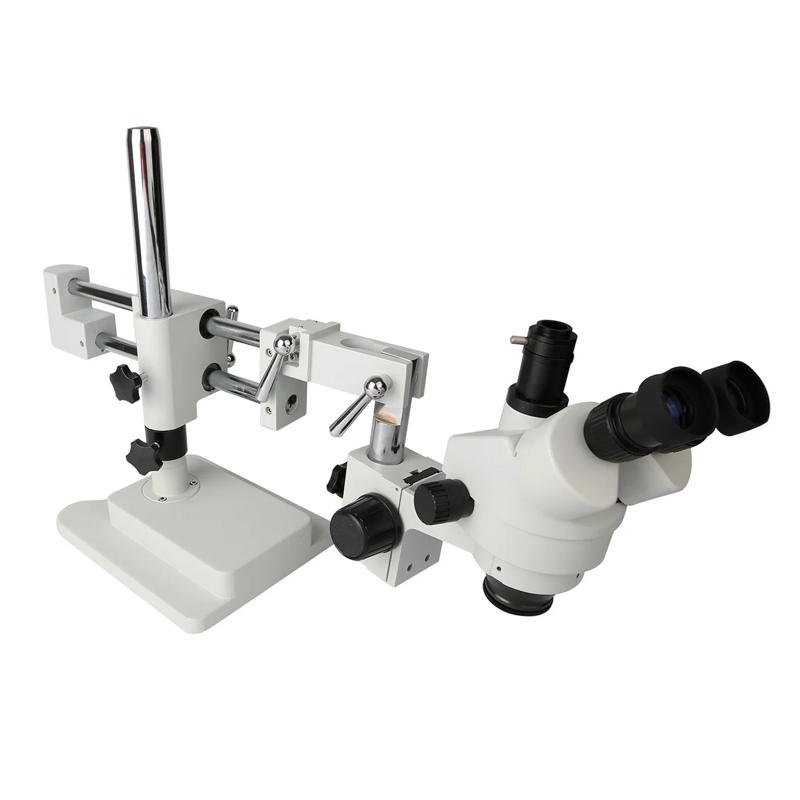
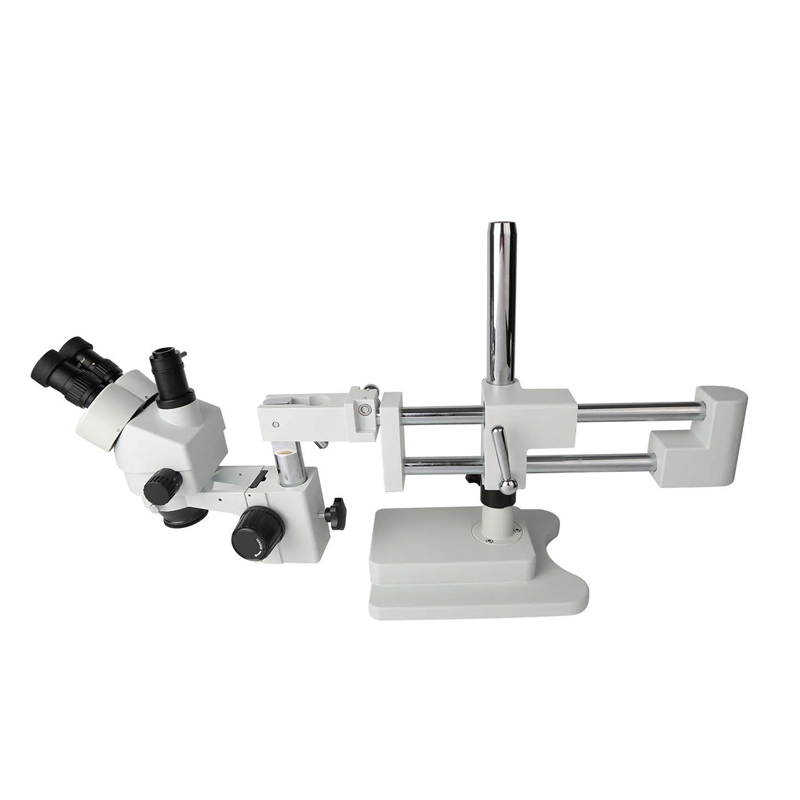
1. The KAISI 37045A-STL2 professional stereo microscope has dioptric adjustment accommodates individual
eye-strength differences.
2. LED light source provides bright, cool light for working with temperature-sensitive specimens.
3. The microscope has a 13.5" pillar that provides a 9" vertical working distance.
4. Bilateral focus eases use for left- and right-handed users.
5. The 17" boom arm has a 12" working distance. All metal construction is durable and stain-resistant.
Specification
1. Head: Binocular
2. Objective power: 2X
3. Eyepieces(DIN, 30.5mm): WF10x18mm, WF20x10mm
4. Focus: Bilateral coarse
5. Microscope stand: Boom-arm stand, Pillar Stand
6. Illumination type: Upper, reflected
7.Microscopes are instruments used to enhance the resolution of an object or image. Types include compound,
stereo, or digital.
Digital microscopes are used to display an image on a monitor, rather than looking through a lens.
Microscopes can have monocular (one), binocular (two), or trinocular (three) eyepieces, with varying
magnification abilities.
Magnification ability refers to the size of an image. Resolution, also known as resolvant power, refers to the
clarity of the image.
The interaction between field of view (FOV), numerical aperture (NA), and working distance (WD) determines
resolution. Microscopes can control magnification through a fixed focus, or through a range of adjustments.
They can also utilize LED, fluorescent, and mirror light sources to help control viewing capabilities.